Abdominoplasty Surgery Melbourne
Abdominoplasty Surgery Melbourne
A tummy tuck (abdominoplasty) aims to reconstruct the abdominal wall and address concerns in the abdominal area after severe weight loss or pregnancy. Typically, patients have excessive loose skin, stretch marks and excess fatty tissue. Many individuals also have weakened, separated muscles (rectus divarication or diastasis recti) and small hernias around the navel — all of which can negatively affect function, stability and posture.
Additionally, some individuals have excess fatty tissue and skin over the pubic bone. This can cause hygiene issues, difficulty wearing tight-fitting clothes and painful chafing. An abdominoplasty can help address these concerns.
All individuals must understand what the surgical procedure involves and have realistic expectations about the outcome. An abdominoplasty cannot create a 6-pack and is not a weight loss solution; however, it may help reshape the abdominal area when other methods have not been effective.
Abdominoplasty can be done solely or in conjunction with liposuction. In Chelsea Cosmetics we do abdominoplasty with high definition liposuction where we removal the deep and superficial fat and then we excise the excess skin
If you want to learn more about abdominoplasty surgery in Melbourne, call our clinic on (03) 8822 3472 to book a consultation.
Before & After Photos
Abdominoplasty surgical techniques
Some individuals require more extensive surgery than others. Consequently, there are various types of abdominoplasty procedures. The type of abdominoplasty procedure recommended for you will depend on your physique, medical history, existing concerns, desired outcomes and other factors. The two most common abdominoplasty procedures are as follows.
Traditional Tummy Tuck (Full Abdominoplasty)
A traditional or full abdominoplasty is a surgical procedure that removes excess skin and fat from the entire abdominal area, both the upper and lower regions. It leaves a horizontal scar from hip to hip, along with a small scar around the navel.
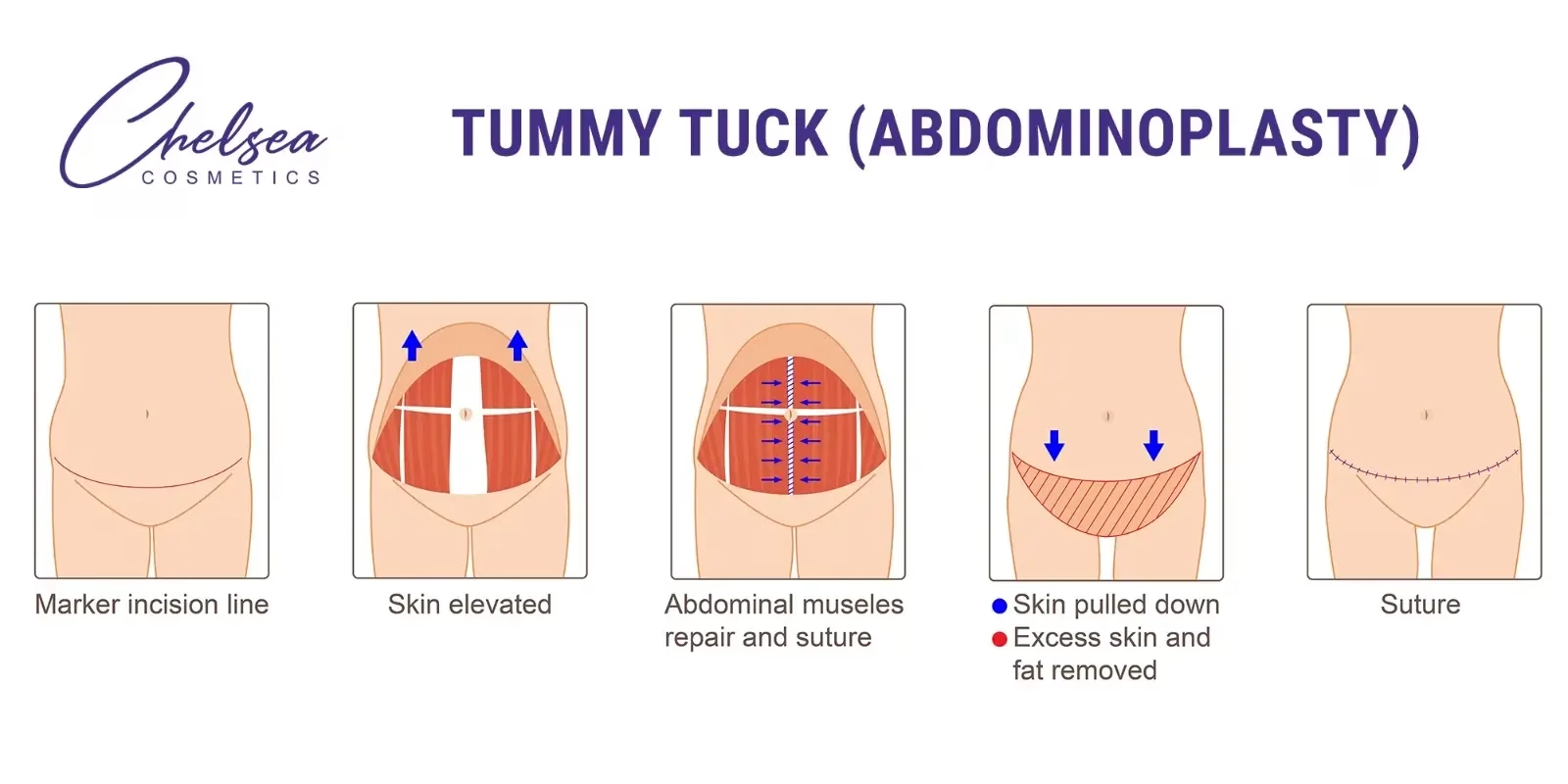
During a typical full abdominoplasty, Dr Attalla will:
- Remove excess fat deposits via liposuction.
- Use permanent stitches to tighten the connective tissue and the abdomen to keep the muscles in place.
- Remove excess skin and tissue.
- Carefully pull the remaining skin downward and then reshape it.
- Prevent fluid buildup by inserting drainage tubes before suturing to close the incision.
- Cover the patient's navel and horizontal wounds with a surgical dressing.
- Fit the patient with a compression garment (this will be worn for the next six weeks)
Mini Tummy Tuck
A mini tummy tuck is reserved for individuals who only have issues (such as a small amount of loose skin) in the area beneath their navel. The area above and around the navel does not require attention. This procedure leaves a small horizontal scar that is only slightly larger than a cesarean scar. During a mini abdominoplasty, Dr Attalla will:
- Create a horizontal incision directly above the pubic bone
- Liposuction the area to remove small deposits of fat
- Remove all excess skin and tissue
- Close the incision with stitches
Your initial consultation with Dr Mark Attalla
Your first consultation is vital to determine whether abdominoplasty is appropriate for you. It also allows you to become fully informed about the procedure.
Please be advised that you will need a GP referral before booking your appointment.
During your appointment, you’ll cover:
- Concerns & objectives: Dr Attalla will listen to your concerns and goals.
- Assessment: You’ll undergo a thorough medical assessment to identify factors that could affect your procedure or recovery.
- The surgery: Dr Attalla will explain in detail all procedure options suitable for you, as well as all risks and complications.
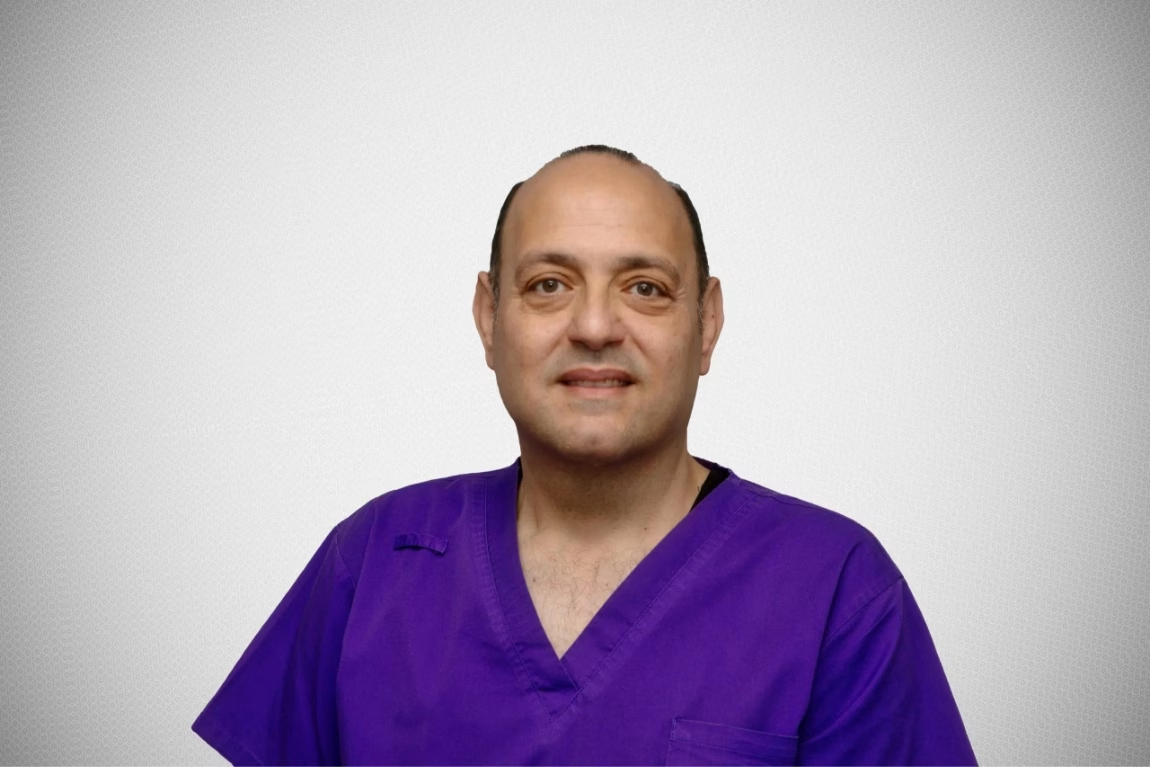
Dr Mark Attalla, FACCS – Cosmetic Practitioner
MBBCHa Bachelor of Medicine, Bachelor of Surgery
FRACCSM Fellow of the Royal Australian College of General Practice
FACCS Fellow of the Australian College of Cosmetic Surgery and Medicine
MED0001170831
Suitable Candidates
To determine your suitability for abdominoplasty, you’ll need an initial consultation with Dr Attalla. However, typically, suitable candidates have:
- Excess abdominal skin due to significant weight loss or pregnancy
- Weakened or separated abdominal muscles, often after pregnancy
- Good overall health without serious medical conditions
- Not been smoking or are willing to quit smoking before and after the surgery
- Realistic expectations about the outcomes of the procedure
- Maintained a stable weight and are not planning on significant weight loss
- Excess abdominal fat, resistant to diet and exercise
About smoking and abdominoplasty
Smoking, vaping or ingesting any nicotine-based products has a serious effect on the healing process due to its nicotine and carbon dioxide effect. Smoking should be ceased two months before surgery and two months after. If you are a smoker, Dr Attalla typically puts patients on a natural medicine regimen of antioxidants and herbal medicine to improve the circulation to promote optimal scarring and healing.
The abdominoplasty procedure
Dr Attalla performs all abdominoplasty procedures in a registered private hospital with the patient under general anaesthesia. Depending on the complexity of the surgery, it may take 3 to 4 hours. All incisions are discreetly placed so they are hidden when wearing regular underwear.
Your recovery timeline
Recovery from an abdominoplasty varies, depending on the extent of the surgery. However, the steps below outline the general recovery process:
Immediately after surgery:
- You will wake in a recovery room where you’ll be monitored carefully for several hours.
- Some pain or discomfort may be felt in the abdominal area. However, you’ll be given pain medications to help alleviate these sensations.
- Your bed head will be raised, and pillows will be placed under your knees to keep your hips flexed and prevent any tension around your wounds.
- The medical team will have fitted you with a compression garment after the procedure, while you were still asleep. This garment helps prevent swelling and must be worn for approximately six weeks following the procedure.
- You will likely have one or two drains coming out from, or just below, your wounds. These drains help remove any fluid from the surgical area.
- You’ll be fitted with a catheter so that you don’t have to worry about going to the toilet and straining your abdominal area.
- A drip will be in place to give you intravenous fluids, the buttocks and pain medication.
- A massage device will gently stimulate your leg muscles to help minimise the risk of leg vein clots.
- You will be wearing an oxygen mask to help you breathe more easily.
Day 1:
- You’ll be encouraged to get out of bed briefly and take a few steps.
- It is normal to feel some discomfort and pain in the abdominal area, although you will be given plenty of pain medications while in hospital.
- Your drips and catheter will be removed before you leave the hospital.
- You are encouraged to gently walk around from the first day after surgery.
Days 7 – 10:
- All swelling and bruising will peak
- Drainage tubes will be removed
- NB: All stitches are under the skin and are absorbable. Hence, no removal is required.
- You’ll be encouraged to take very short walks around the house to help with circulation. However, it’s vital you continue to rest as much as possible during this time.
Week 2:
- Depending on the extent of your surgery, you may consider driving
- If your work is sedentary, you can return to some light duties
Weeks 4 – 6
- Bruising and swelling will have subsided
- The results will begin to show
- A feeling of tightness in the abdominal area will decrease
- Regular sensations may slowly start to improve
- More activities and exercise can be resumed
Sleeping
Patients should sleep for at least 9 hours each day, lying on their backs with their knees bent. Sleeping in this position prevents excess strain on the incisions.
Restricted Activities
For several weeks after surgery, it's important not to put too much strain on your incisions and sutures. Make sure to avoid lifting weights. After abdominal surgery, limit your exercise for about a month, then gradually ease back into your regular workout routine over the next 4 weeks. Typically, you can start working out again at the 6-week mark.
For about six weeks, patients must not participate in strenuous physical activities, including:
- Aerobic exercise
- Jogging
- Running
- Riding a bike
- Fast-paced walking
- Weight lifting
Once the healing process is complete, patients should follow a healthy, balanced diet and engage in regular exercise.
The importance of your compression garment
Immediately after your surgery, you’ll be fitted with a compression garment before you wake. This garment is a medical-grade article of clothing made with high-quality, durable, breathable materials. Your compression garment plays a vital role in your recovery, as it helps prevent swelling and bruising, minimises pain and discomfort, reduces tension on surgical wounds, minimises visible scarring and helps reduce the risk of complications and infection.
You must wear your compression garment day and night for approximately 6 weeks following the procedure. Only take the garment off when showering or bathing. Wearing this garment should feel comfortable and supportive, not constricting or painful. If you do find the garment painful, contact Dr Attalla as you may need a larger size.
Understanding muscle separation
Oftentimes, when women request an abdominoplasty after pregnancy, they have a separation of the abdominal muscles. This separation, known as the diastases recti, can be minor or severe. When the separation is significant, it can act a lot like a hernia, with a prominent ridge of fullness protruding along the abdominal wall midline when under strain. It can also disrupt biomechanical function in the lower back and midsection. Consequently, core strength is compromised, placing extra stress on the lower back. It can also affect bladder control. Therefore, an essential part of an abdominoplasty is tightening the separated abdominal muscles to improve function and core strength.
Abdominoplasty Costs
Does Medicare cover an abdominoplasty?
If your abdominoplasty procedure was purely for cosmetic reasons, then Medicare will not pay for it. However, if Dr Attalla deems the procedure a medical necessity (and the surgery is reconstructive), then Medicare will assign it an item number (30177), and you will be entitled to a small rebate. This rebate may cover a small portion of the hospital costs, the surgeon’s fee, and the anaesthetist's fee.
NB: The government reinstated Medicare item number 30175 on 1st of July 2022. This covers part of the cost of an abdominoplasty for some post-pregnancy patients suffering from separated abdominal muscles (diastasis recti)
STEPS TO DETERMINE MEDICARE ELIGIBILITY
- Visit your GP to discuss your abdominal concerns.
- Get a referral from your GP outlining your medical condition.
- Book an initial consultation with Dr Attalla.
- During your consultation, Dr Attalla will examine you and determine whether you meet the Medicare criteria. If an applicable Medicare item number is identified, you may receive a partial Medicare rebate.
Can Private Health Insurance cover an abdominoplasty?
Most of the cost of abdominoplasty is paid privately.Your Private Health Insurance will only provide cover for your procedure if you have been assigned a Medicare item number. Please note that the coverage is partial (covering hospital and anaesthetic costs) Private health insurance funds typically cover reconstructive procedures deemed medically necessary. Individuals usually require the highest level of hospital cover and have maintained it for at least 12 months.
Patients should sleep at least 9 hours daily, lying on their back with their knees bent. Sleeping in this position prevents excess strain from being placed on the incisions.
Potential risks & complications
All surgery carries risks and complications, and specific risks may accompany certain procedures.
Specific risks and complications associated with abdominoplasty surgery include:
- bleeding or infection
- Seroma or haematoma
- an accumulation of fluid in the surgical area
- scarring (this is inevitable with every surgical procedure; however, some individuals have more prominent scarring than others)
- altered sensations in the abdominal area
- a requirement for revision surgery
Frequently Asked Questions
Schedule a Consultation
Book a consultation to learn more about abdominoplasty.
Before deciding on cosmetic surgery, it's important to have realistic expectations about the outcome. Talk to your cosmetic doctor about what to expect from the surgery and make sure you understand the recovery time and results.
*Individual outcomes vary, as the results for one person may not be the same for others. Several factors, including genetics, diet, and exercise, can contribute to these differences.
*Every type of cosmetic surgery involves invasive procedures and, therefore, comes with an element of risk. This includes all types of liposuction in Melbourne.
Get in Touch
Speak to one of our practitioners and get personalised advice. Contact us to schedule your consultation.