Liposuction Melbourne
Liposuction is a surgical procedure that suctions excess, stubborn pockets of fat to cosmetically address body form. Also known as lipoplasty or suction-assisted lipectomy, liposuction is not a weight loss method. We strongly advise patients to reach their weight-loss goals using healthy, natural methods, and to use liposuction to address localised pockets of fat that don’t respond to natural methods alone.
Types of Liposuction Treatments in Melbourne
The method Dr Mark Attalla may recommend will depend on several factors, including the size of the area being treated, the amount of fat to be removed, and the condition of your skin. The details of how the procedure is carried out, including the specific methods and instruments, will be explained during your consultation.
Common approaches include:
Laser Lipolysis with Power-Assisted Liposuction (PAL)
This approach involves using a probe that uses laser energy to prepare the fat for removal. Power-Assisted Liposuction is then used, where vibrations help to loosen the tissue before it is suctioned out.
VASERLIPO®
In this method, a probe delivers ultrasound energy to the targeted area, sometimes referred to as acoustic streaming. The prepared fat is then removed through suction.
SlimLipo™
SlimLipo™ combines traditional liposuction techniques with laser energy. The laser energy is directed at the fat cells to break them down before removal.
Tumescent Liposuction
With this technique, a solution is administered to the area before fat removal. A small vacuum pump is then used to remove the fat while you are positioned lying down, on your side, or standing. This method can be associated with bruising and some recovery time.
Traditional Liposuction
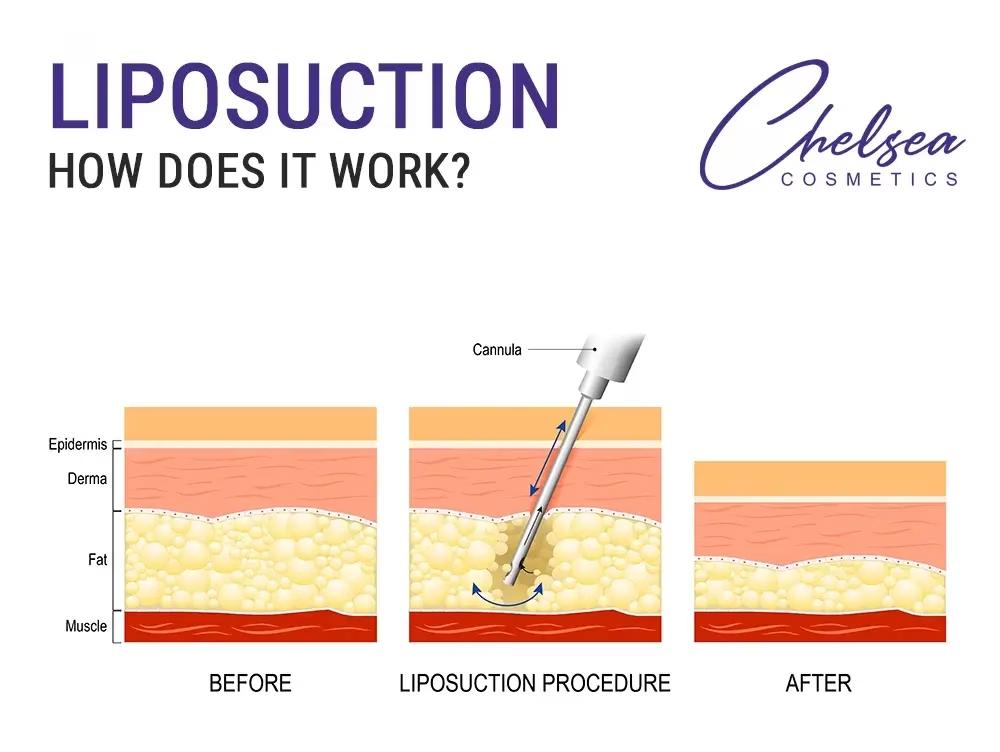
This approach is generally performed in a hospital setting under a general anaesthetic. A cannula, called an aspirator, is moved back and forth to loosen and remove the fat.
Mega Liposuction
This term refers to procedures where a larger volume of fat is removed (more than 5 liters of aspirate), which may be considered in certain circumstances for patients with higher body weight.
How Liposuction Works
Liposuction is a surgical procedure that may be used to remove fat cells from specific areas of the body. The process involves preparing the area before the fat is removed.
Dr Mark Attalla will determine the most appropriate approach for you based on your individual circumstances. The details of how the procedure is carried out, including the specific methods and instruments, will be explained during your consultation.
Liposuction types based on technique
Traditional liposuction: Fat is removed from the deep layer of fat to decrease the size of the areas requiring attention.
Superficial liposuction: This was a technique used in the eighties to help with skin retraction. In this technique, the operator uses a thin cannula and removes most of the fat close to the skin, which allows the skin to retract. that used to be performed before the invention of laser and Vaser liposuction.
Liposculpture: The doctor removes the fat from some areas more than others to make the body shape more sculpted.
360 liposuction: This technique is based on removing deep fat in a circumferential manner, aiming to achieve improved results.
High definition liposuction: This technique addresses three types of fat: deep fat, superficial fat and the intermuscular fat, leaving less than 20% fat in some areas to show the muscles and the muscle attachments. It is far more superior than other types of liposuction, as the results are more natural and help to highlight the definition of your real muscles. It does not give you a fake muscle shape but instead, a real and natural one.
Targeted Areas of the Body
Liposuction removes excess fat from the body or face. Targeted areas for liposuction procedures include:
- Upper arms
- Under the chin
- Abdomen
- Hips and waist
- Thighs
- Upper and lower back
- Legs
- Female breasts
- Male breasts (i.e., gynaecomastia)
- Face
Your recovery after liposuction surgery
Recovery after liposuction varies between individuals and depends on several factors, including the type of procedure, areas treated and individual healing responses. During your initial consultation, Dr Attalla will provide you with personalised guidance on what to expect and how to support your recovery. The following is a general guide for recovery:
Immediately after surgery
- If you’ve had a general anaesthetic, you’ll be taken into a recovery room where you’ll be monitored for several hours.
- Once stabilised, patients either go home or are moved to an overnight ward.
- It is normal to experience some discomfort or pain, swelling and bruising. This is a regular part of the healing process.
- You’ll be fitted with a compression garment to help protect the treated areas, reduce swelling and support the new shape.
- If you’ve had high-definition liposuction, you will have surgical drains. Staff will tell you how to look after the drains and how to measure the amount of fluid in them.
- If going home after day surgery, you must have someone accompany you when moving around or going to the bathroom. You may faint and may need help when standing up.
- If you had High Definition liposuction you will have drains which are small tubes coming out from the small liposuction incision to drain the blood and the excessive fluids that get treated after high definition liposuction.
The first 24 hours
You’ll be given pain medication to manage any pain or discomfort. You may notice some discharge from the incision sites during this time, which is normal.
1 week
- You will visit Dr Attalla in his rooms for a scheduled follow-up visit. Your compression garment will be removed so that Dr Attalla can carefully examine the area and ensure that everything is healing well.
- Most of the pain and discomfort would have subsided
- Drains are typically removed one week after HD liposuction
2 weeks
You will be required to come to the clinic every week for four weeks to have lymphatic drainage and massage.
Maximum swelling and some tissue hardening happens on Week 2. Typically, most of the swelling and hardening will subside over the following two weeks.
1 month
- Most patients can return to work approximately two weeks after their procedure. If your work is physically intensive, we suggest waiting for another two weeks. If you operate heavy machinery, you may need to wait longer. We’ll provide each patient with guidance on when they can return to work.
- The majority of swelling and bruising will have subsided
- In the third and fourth weeks, patients can reduce the time they wear their compression garment from 24 hours a day to 12 hours a day.
- After four weeks, patients can return to normal daily activities and light exercise.
Liposuction Melbourne Consultation with Dr Attalla
The consultation is an important first step in planning liposuction. During this meeting, Dr Attalla will review your concerns and examine the areas you would like addressed. This may include assessing skin condition, taking measurements, and recording photographs for medical planning.
Your overall health and medical history will also be reviewed, including any medications, vitamins, or supplements you are taking. This information helps in identifying any factors that could influence the procedure or recovery.
Lifestyle habits such as smoking, alcohol use, and recreational drug use may also be discussed, as these can affect the healing process. Providing accurate information allows for a safe and well-prepared plan.
Liposuction Costs In Melbourne
Determining the cost of a liposuction procedure in Melbourne involves several factors that are unique to each individual. To accurately assess these costs, an initial consultation with Dr Mark Attalla is essential. This consultation can be conveniently scheduled to take place over the phone, via WhatsApp, or through FaceTime, accommodating those who may prefer a virtual meeting.
During this initial consultation, Dr Mark Attalla will discuss your aesthetic goals and review the specific areas you want to target with liposuction. Additionally, he will evaluate different liposuction techniques and recommend the most appropriate method based on your body type and the area(s) to be treated.
The cost of the procedure will be calculated based on the complexity of the case, the number of areas to be treated, the type of liposuction technique selected, and other related factors such as anaesthesia and facility fees. This tailored approach ensures that all patients receive a detailed and accurate estimation of costs, allowing for informed decision-making.
Liposuction Outcomes
- May help remove excess fat that do not respond to diet and exercise
- May help reduce fat cells in target areas
- May be suitable for large-volume fat removal
Disclaimer: The outcomes mentioned above should not influence your decision when considering liposuction; instead, focus on adopting an exercise routine and maintaining a healthy lifestyle.
Risks of Liposuction
Any plastic surgery comes with potential risks and side effects. Possible complications include pain and discomfort, internal puncture, scarring, emboli, bruising, numbness, fluid accumulation, fat embolism, permanent skin colour changes, hyperpigmentation, where the skin darkens, infections, seromas, and hematomas. There is also the possibility of an allergic reaction to local anaesthetic and medications, or experiencing a contour irregularity.
Other possible complications include dysesthesia, where the area around the treatment feels strange or distorted and sometimes no feeling is present. Hyperesthesia is the opposite, where the area can be highly sensitive to touch.
Preparing for Liposuction
Patients receive varying levels of anaesthesia when undergoing liposuction. Consequently, you cannot drive for 24 hours. On the day of surgery, you must have a responsible adult drive you home and remain with you overnight. Please note that hiring transportation following anaesthesia is not permitted. Patients who arrive without a driver will have to reschedule their procedure.
You must discontinue taking or decrease your dose of certain medications before surgery. These medications include non-steroidal anti-inflammatory drugs (NSAIDs), aspirin, ibuprofen and blood thinners. If you take any prescription medications, you must discuss them with Dr Attalla before the procedure in case you need to reduce or discontinue them.
Herbal supplements to be discontinued include Kava Kava, St. John's Wort, Garlic, Ephedra, Valerian, Feverfew, Ginseng, Dong Quai, Goldenseal, Echinacea, Liquorice and Ginkgo biloba. You must also stop taking vitamin E and fish oil during this timeframe.
Liposuction FAQs
Contact Chelsea Cosmetics at +61 3 8822 3472 to learn more about liposuction.
Before deciding on cosmetic surgery, it's important to have realistic expectations about the outcome. Talk to your cosmetic doctor about what to expect from the surgery and make sure you understand the recovery time and results.
*Individual outcomes vary, as the results for one person may not be the same for others. Several factors, including genetics, diet, and exercise, can contribute to these differences.
*Every type of cosmetic surgery involves invasive procedures and, therefore, comes with an element of risk. This includes all types of liposuction in Melbourne.
Get in Touch
Speak to one of our practitioners and get personalised advice on liposuction. Contact us to schedule your consultation.