What is a mole?
A common mole is essentially a blemish on the face or body that occurs when skin cells (melanocytes) grow in a cluster. It could appear alone or in groups, on any part of the face or body, in different sizes, and is usually dark brown or black in colour. Some moles could be flat, while others could have a raised appearance.
While most of these moles are harmless, they could also indicate the possibility of something serious if they change their colour or shape or if they begin to irritate your skin. If this happens, then you must get in touch with a mole removal clinic and have it checked by a doctor immediately. Moles, also known as nevi, should not be taken lightly. They should be diagnosed and thoroughly analysed by medical professionals prior to any cosmetic mole removal.
Why do we get moles?
Moles, also known as nevi, are common skin growths that occur when melanocytes, the cells responsible for producing pigment, grow in clusters instead of being evenly distributed across the skin. They can develop due to a combination of genetic factors, sun exposure, and hormonal changes.
Genetics play a significant role, as moles often run in families. Sun exposure, particularly during childhood, can increase the number of moles and may cause existing ones to darken. Hormonal changes, such as those during puberty and pregnancy, can also lead to the formation of new moles or changes in existing ones. While most moles are benign, it is important to monitor them for any changes that might indicate skin cancer.
You should immediately consult your doctor and seek an appointment with a medical professional if you observe the following changes:
- Change of colour
- Increase in size or thickness
- Change in texture
- Irregularities in its outline
- A size bigger than 6mm or ¼”, almost the size of a pencil eraser
- Appearance after the age of 21
- A sore or spot that continues to itch, hurt, crust, scab, erode or bleed
- An open sore that does not heal within three weeks
At times, some skin irregularities might seem to be moles, but they could actually be solar keratosis. Birthmarks should not be confused with moles. The same goes for haemangioma, which appears to be a mole but is actually a collection of blood vessels underneath the skin.
Why Remove Moles?
Moles may be removed for a range of reasons, including medical and practical considerations. From a medical perspective, removal may be advised if a mole shows changes in size, shape, colour, or texture that need to be checked for possible melanoma or other skin conditions.
Some patients also choose mole removal for practical reasons, such as when a mole causes irritation or discomfort in areas that rub against clothing, shaving, or other daily activities. A healthcare professional can provide an assessment and recommend the most appropriate approach.
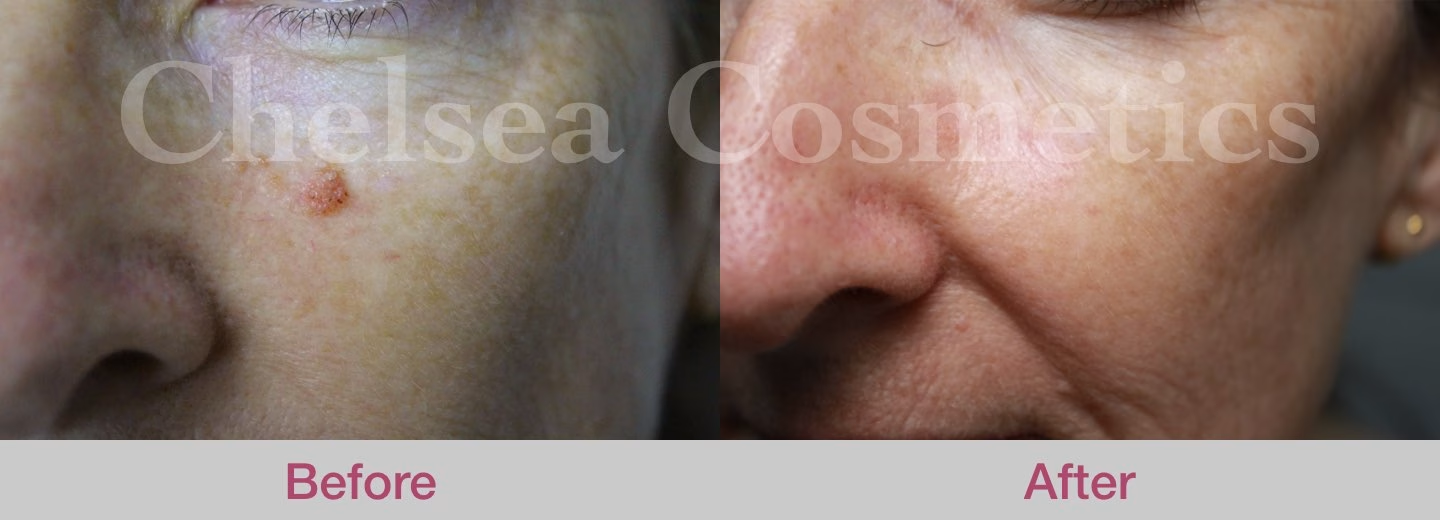
Before & After Photos
During the Procedure
Mole removal can be carried out using different methods, depending on factors such as size, location, and type. One option is surgical excision, where the mole is removed along with a margin of surrounding skin. The area may then be closed with stitches, and the removed tissue can be sent for examination if required.
Another option is a surgical shave, which may be considered for raised moles. In this approach, the mole is carefully removed from the surface of the skin, usually without the need for stitches.
Laser treatment may also be considered for certain moles. This method uses focused light to target the mole, and it is generally more suitable for smaller, non-cancerous types.
Each approach has its own considerations, and a healthcare professional can advise on the most appropriate method for an individual case.
After the Procedure
Risks and Complications
Risks and complications associated with mole removal can vary depending on the method used and the individual patient, but they generally include:
- Infection: Any surgical procedure carries a risk of infection, which can occur if bacteria enter the wound site. Proper aftercare and hygiene can minimise this risk.
- Scarring: Removal methods, especially surgical excision, can leave scars. The size and appearance of the scar depend on the mole's size and location, as well as the patient's skin type and healing process.
- Bleeding: Some bleeding is expected during and after the procedure, but excessive bleeding can be a complication that requires medical attention.
- Pain or Discomfort: Patients may experience pain or discomfort at the treatment site during and after the procedure, which can usually be managed with over-the-counter pain relievers.
- Allergic Reactions: There is a risk of allergic reactions to medicines used during the procedure.
- Changes in Skin Sensation: Some patients may experience temporary or permanent changes in skin sensation around the treated area, including numbness or tingling.
- Recurrence: In some cases, the mole may grow back if not completely removed, especially with methods like laser treatment.
- Hyperpigmentation or Hypopigmentation: The treated area may become darker (hyperpigmentation) or lighter (hypopigmentation) than the surrounding skin, especially if proper sun protection is not followed post-procedure.
Get in Touch
Speak to one of our practitioners and get personalised advice. Contact us to schedule your consultation.