Breast Lift (Mastopexy) Melbourne
A Breast Lift (Mastopexy) is a surgical procedure that addresses sagging (ptosis) or drooping of the breast. It aims to elevate and reshape the breast by removing excess skin and tightening loose tissue. The nipples and areola are also repositioned. A breast lift does not use implants and therefore does not create volume. However, in some cases where additional volume is desired, we can combine a breast augmentation (implants) with a breast lift, or a fat concentrate transplant with a breast lift.
Dr Mark Attalla has extensive experience in this procedure and regularly performs Breast Lifts for his patients in Chelsea Heights, Templestowe and surrounding suburbs in Melbourne.
How is a breast lift performed?
Dr Attalla performs breast lift surgery on patients under general anaesthesia in an accredited private hospital. Most procedures take between two to three hours. During surgery, he creates the appropriate incisions to remove excess loose skin and then repositions the breasts to a higher profile on the chest wall.
This surgery is often performed as a day procedure, which means the patient can go home on the same day. However, sometimes patients prefer to stay in hospital overnight, particularly if a substantial amount of correction is required or the surgery is combined with other procedures. As the procedure is performed under general anaesthetic, you’ll need someone to drive you home from hospital.
Am I a good candidate for breast lift surgery?
To determine whether you are a good candidate for breast lift surgery, you’ll need an initial consultation with Dr Mark Attalla. However, you may be a suitable candidate if any of the following apply:
- Breasts that appear deflated after breastfeeding or pregnancy
- Breasts that droop or sag
- Breasts that have lost their shape after massive weight loss
- Nipples that point downwards and not forward
- Breasts that are asymmetrical or in different positions.
Additionally, good candidates for breast lift surgery must be in good health, mentally and physically, a non-smoker, not currently breastfeeding or pregnant and willing to follow all post-procedure instructions to support their recovery. They must also be aware of all risks and complications and have realistic expectations about the procedure.
Types of breast lifts
There are several techniques used in a breast lift, with the best-suited technique determined by factors such as breast shape and size, the degree of sagging, the position of the areola, and skin quality. To determine the most suitable technique for you, you need an initial consultation with Dr Attalla. Below are the four techniques used:
- Crescent Lift: A crescent (or semicircular) incision is created along the upper half of the areola. This technique is only used when extremely minimal adjustments are required.
- Peri-Areolar Lift: A crescent (or semicircular) incision is created around the areola. This incision is slightly larger than the crescent left and may provide a minimal lift.
- Vertical (Lollipop) Lift: A circular incision is created around the areola. Then, an additional vertical incision extends straight down, making a lollipop shape. This technique can provide a moderate lift. The lollipop lift is used if the patient has excessive volume loss in the upper pole of the breast.
- Anchor (Inverted T) Lift: Along with the above-mentioned circular and vertical incision, an additional incision is also made along the breast crease. This technique can significantly change the shape and position of the breast.
Understanding a breast lift vs breast augmentation
A breast lift aims to lift and reshape breast tissue without using implants. Alternatively, a breast augmentation (mammoplasty) uses breast implants to create fullness and volume in the breasts.
Sometimes, an individual will need added volume to their breasts. In this case, a breast lift is combined with a breast augmentation, using implants as well.
Dr. Attalla performs Mastopexy in a slightly different way to most, as he performs liposuction to the tail of the breast, which is the fatty extension fold from the breast to the underarms and the lumpy area above the breast. Liposuction in these areas makes the breast look more rounded and has more cosmetic shape.
Your initial consultation with Dr Mark Attalla
Your first consultation is vital to determine whether breast lift surgery is appropriate for you. It also allows you to become fully informed about the procedure.
Please be advised that you will need a GP referral before booking your appointment.
During your appointment, you’ll cover:
- Concerns & objectives: Dr Attalla will listen to your concerns and objectives regarding breast lift surgery.
- Assessment: You’ll be given a thorough medical assessment to help identify factors that could influence your procedure or recovery.
- The surgery: Dr Attalla will explain in detail all procedure options suitable for you, as well as all risks and complications.
- (Mock-up) after photos: Dr Attalla takes photos of the breast, then runs it through a special editing program. This helps ensure that he understands the patient’s expectations, and helps the patient know what to expect with the final results.
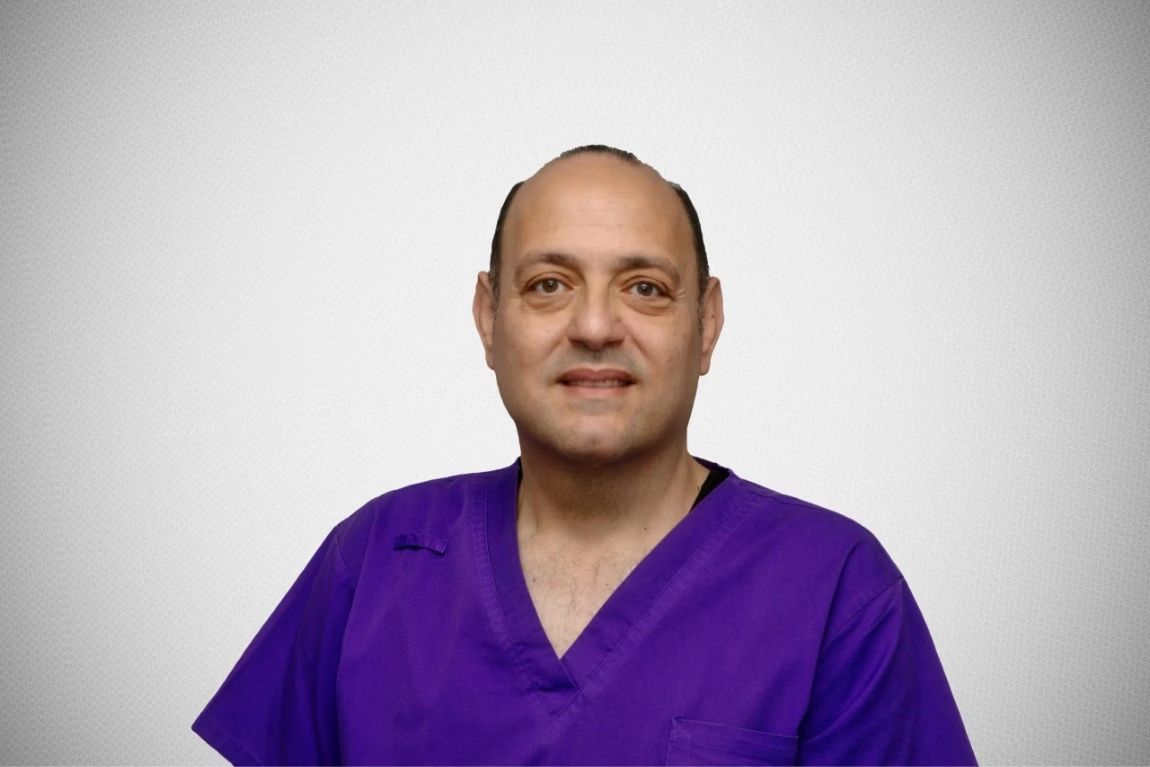
Dr Mark Attalla, FACCS – Cosmetic Practitioner
MBBCHa Bachelor of Medicine, Bachelor of Surgery
FRACCSM Fellow of the Royal Australian College of General Practice
FACCS Fellow of the Australian College of Cosmetic Surgery and Medicine
MED0001170831
What happens on the day of surgery?
On your surgery day, the hospital staff will call you with the time to arrive at the hospital. They will also cover all presurgical requirements, such as fasting.
When you arrive at the hospital, you’ll need to check in at the reception desk first. Soon after, a hospital staff member will call you and accompany you to the presurgical waiting area. Here, you’ll be officially checked in for your surgery. You’ll be instructed to change into a gown. While you wait, the staff will ensure that you are as comfortable as possible. Before your surgery, you’ll be taken into the ghetto anaesthetic bay. Here, you’ll meet Dr Attalla again. He will make the required surgical markings on your chest area and have a final chat with you about your procedure. You’ll also meet your anaesthetist, who will then put you to sleep.
When you wake after the procedure, you’ll be taken to a recovery area and monitored carefully.
You will be fitted in a special surgical bra and elastic stockings. The surgical bra should be kept on for one week and is required to support the breast during the recovery time. It is essential that you keep it on during the day. Do not wear any wired bras for at least two months after surgery.
Before your procedure, you will be given written post-operative instructions. Additionally, your nurses will verbally repeat these instructions with you.
Breast Lift Recovery and Aftercare
Immediately after your breast lift surgery, you’ll be fitted with a cotton bra and given a compression garment to wear for the following six weeks. This garment holds your breasts in their new position and helps minimise swelling and promote healing.
You may experience some discomfort or pain during this time. This is to be expected and can be managed with prescription oral pain medication. Typically, patients no longer need pain medication after the first week.
Recovery Timeline
Day 1
- It’s normal to experience swelling, discomfort and pain immediately after surgery.
- Continue to take your pain medication.
- Rest as much as possible, and minimise movement, to allow your body to recover.
- Avoid any activities that could raise blood pressure or increase heart rate.
Days 2-5
- Swelling and bruising will be most notable
- You may take a shower and engage in gentle activities, such as short walks around your home.
- Continue resting and limiting movement to allow your body to heal.
Week 1
- Pain, swelling and bruising will begin to subside
- Take regular, short walks around the house to encourage circulation.
- Avoid all strenuous activities (no exercise or heavy lifting)
- You may resume light activities if you feel comfortable
- After one week, you may resume desk work, provided you feel comfortable.
Week 4
- Most swelling and bruising should have subsided
- You can resume driving after 1 week
- You may resume most light activities, but avoid strenuous exercise or heavy lifting.
- Continue to wear your compression garment
Week 6
- If you have a physically demanding job, you can now resume work
- Scarring will be noticeable but will fade over time. Typically, scars take approximately 12 months or more to fully mature and fade.
- You may recommence gym classes and vigorous activities slowly, using common sense caution and discomfort as a guide.
- In dark skinned patients, the scar can look darker initially and then get lighter. If the dark colour persists, it can be treated by using Q switch laser at no extra cost.
Month 6
By 6 months, all activities can be resumed. However, always listen to your body, recommence activities slowly and don’t overdo it. Your scars will have faded slightly, but will not completely fade until at least over 12 months. In uncommon cases of delayed healing, fractional laser can be used to help improve the scar quality and shape. Laser sessions are also available for an additional cost.
Breast lift cost
Does Medicare cover breast lift surgery?
Breast lift surgery is primarily cosmetic, not reconstructive. Medicare assigns item numbers only to procedures deemed reconstructive; therefore, Medicare rebates are not provided for this procedure.
Can private health insurance cover breast lift surgery?
Private health insurance will only provide a rebate for procedures assigned item numbers. As Medicare numbers are not assigned to a breast lift, health insurance funds do not offer a rebate for this procedure.
Patients should sleep at least 9 hours daily, lying on their back with their knees bent. Sleeping in this position prevents excess strain from being placed on the incisions.
Potential risks & complications
All surgery carries risks and complications, and specific risks may accompany certain procedures.
Specific risks and complications associated with breast lift surgery include:
- Bleeding
- Infection
- Loss of nipple sensitivity
- Change in skin and areola sensation
- Asymmetry
- Haematoma or seroma
- Unfavourable scarring
- Requirement for revision surgery
- Skin or areola necrosis
- Scar complications like hypertrophic or keloid scar
Frequently Asked Questions
Get in Touch
Speak to one of our practitioners and get personalised advice. Contact us to schedule your consultation.